
Water damage repair in Katy, TX
Once the water's out, repair means deciding honestly what can be saved and what has to come out.
Get Help Now(281) 801-922224/7 emergency line. Free estimates from local pros.
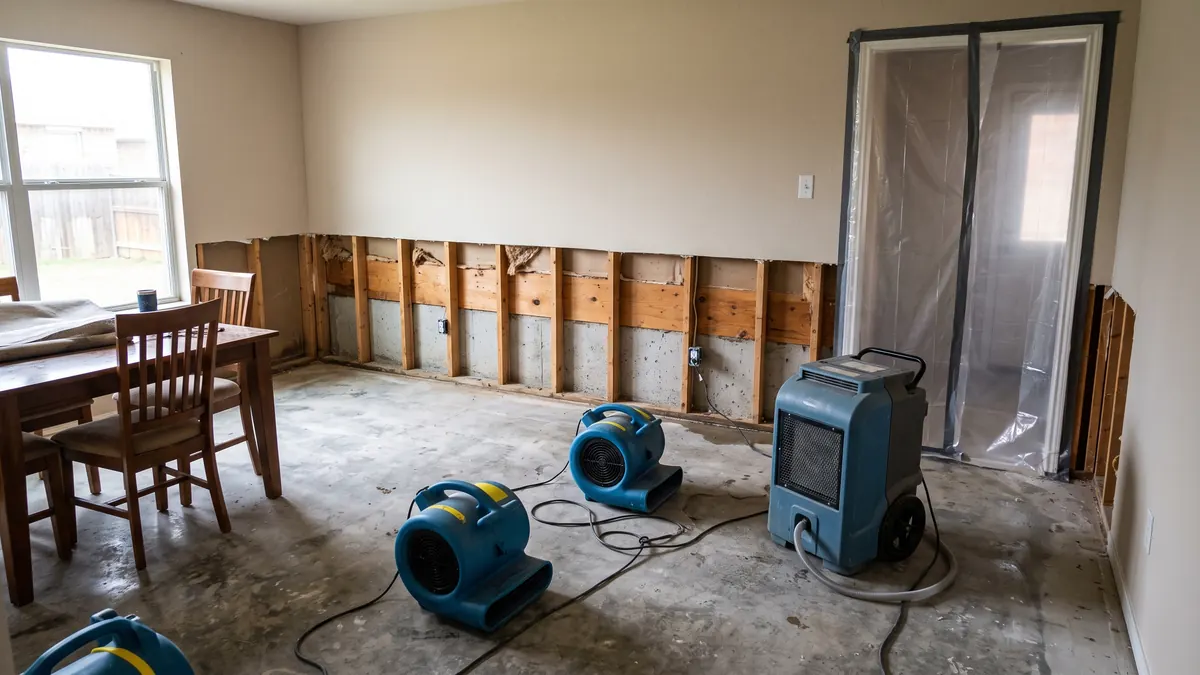
Once the water is gone, repair is about honest decisions, not guesswork. Some materials clean up and dry out fine. Others have to come out no matter how good they look on the surface. This page gets into what usually gets fixed, what gets replaced, and where matching your existing materials gets harder than people expect. If water is still standing in your home right now, our emergency water removal page gets into what has to happen before any of this repair work can start.
Mitigation and repair are two different jobs
Insurers generally treat these as separate scopes of work, even on the same claim. Mitigation is the fast part, stopping the water and drying the space. Repair is what comes after, once everything is dry and you know what actually needs fixing. Our water mitigation page gets into what that first phase looks like and why insurers expect it to happen quickly.
What actually gets repaired vs replaced
Drywall usually gets what’s called a flood cut. That means removing the wet section a foot or so above the waterline, instead of the whole wall, since drywall doesn’t dry cleanly once it’s been soaked. Flooring depends heavily on the material. Tile and some vinyl can often be dried and reused; wood, laminate, and carpet padding usually can’t once they’ve cupped or delaminated. Cabinets hold up better than people expect if the water didn’t sit long. The toe-kick and lower panels take the worst of it, though, and sometimes need replacing even when the rest of the cabinet is fine. Insulation that’s been wet, especially in a wall or attic, almost always gets pulled and replaced rather than dried. Wet insulation loses most of its value and dries unevenly.
The matching-materials problem nobody warns you about
Here’s the part that frustrates people most: your flooring from 2005, when a lot of Grand Lakes was being built out, may simply not be sold anymore. Discontinued tile lines, faded wood stains, and older cabinet finishes are common enough in a market Katy’s age that an exact match isn’t always possible. Sometimes the fix is a close match in the damaged room. Sometimes it means replacing flooring in an adjoining room too, so the transition doesn’t look patched. A repair estimate should tell you which situation you’re in before work starts, not after.
When repair needs a licensed trade
Reconnecting or rerouting plumbing, replacing an electrical outlet in a wet wall, or any structural framing work legally needs a licensed plumber or electrician. A general repair crew can’t do that part of the job. A restoration company can usually coordinate that work, but the actual plumbing or electrical fix has to come from someone licensed to do it. Our guide to water damage restoration cost gets into how these different trades factor into what you end up paying. And the homeowners insurance guide sorts out how coverage typically applies to repair versus mitigation.
Good repair starts with honest scoping
The best repair estimates say plainly what stays and what goes, before any demolition starts. That honesty up front is worth more than a fast start on the wrong plan.
Common questions
Can water-stained drywall be repaired, or does it need to be replaced?
It depends on how far up the wall the water reached and how long it sat. A small stain from a quick leak sometimes just needs cleaning and a coat of primer. Anything that stayed wet for more than a day or two, or reached higher than a few inches, usually gets cut out and replaced instead.
Who actually fixes the leak, the plumber or the restoration company?
The plumber fixes the pipe or fitting that failed. Restoration handles what the water damaged once it's out, drywall, flooring, cabinets, and anything else that got wet. They're two separate scopes of work even though the same water caused both.
Can I just paint over a water stain and call it done?
Paint alone doesn't fix anything underneath it, and stains can bleed right back through fresh paint if the material is still damp. A stain painted over before it's fully dry can also seal in odor or leave a weak spot in the drywall. Confirming the area is dry first is worth the extra day.
Related pages
Appliance leaks
The appliances you trust most every day are also some of the quietest sources of water damage.
Learn more →Burst pipe damage
A frozen or failed supply line can flood a room fast, and drying it out right keeps the damage from spreading inside your walls.
Learn more →Ceiling damage
A stained or sagging ceiling means water is sitting somewhere above your head, and it needs attention fast.
Learn more →Commercial damage
Water in a business isn't just property damage, it's lost revenue for every day the doors stay shut.
Learn more →Talk to a local pro now
We answer 24/7. One call gets a Katy crew moving on your water damage, with a free estimate and help with your insurance claim.
Get Help Now(281) 801-9222Free estimates. No obligation to hire.